Watching someone fill a cart and leave feels personal in a way almost nothing else in ecommerce does. They wanted it. They were right there. Then they were gone, and your analytics has nothing useful to tell you about why.
So you go looking for advice, and you find a list of seven things to fix. Shipping transparency, payment options, returns policy, guest checkout, retargeting, the flow, one-click checkout. All correct. All presented as though they cost you the same amount of attention.
They don’t. Five of those are changes you make once and never think about again. One of them is a system that either earns for you every month or quietly underperforms for years while you assume it’s fine. The biggest mistake I see with abandoned carts isn’t a missing flow. It’s a flow that’s been live so long nobody’s opened it, talking to every single person the same way.
Let’s separate the two.
What the 70% number actually means
Baymard Institute puts the documented average cart abandonment rate at 70.22%, calculated across 50 separate studies running from 2006 through 2025. It’s the number everybody quotes, including me, a minute ago.
Here’s the part worth understanding before you build anything on it. That figure is an average of other people’s studies, spanning nearly two decades and every category of ecommerce there is. Your abandonment rate is a function of your traffic mix, your price point, your category, and how many people arrive on your site with no intention of buying anything today.
A brand running heavy top-of-funnel ads will abandon more carts than a brand living off repeat customers, and neither number tells you anything until you compare it to your own from last quarter. Go pull yours. Then compare it to yours, not to 70.22%.
Why people actually abandon, according to the people who study it
The original version of this post had a header like this one sitting on top of a list of solutions, which helped nobody. So here are the actual reasons, from Baymard’s current checkout research.
- Unexpected costs (shipping, taxes, fees): 39%
- Slow delivery: 21%
- Forced account creation: 19%
- Complex or long checkout: 18%
These are multi-select responses, so they don’t add up to 100 and they’re not a ranking of severity. What they are is a map of friction, and friction is the part you control.
The part you don’t control is intent. A meaningful share of abandonment is people using the cart as a wishlist, price-checking against someone else, or shopping from the couch with no plan to buy tonight. No checkout optimization fixes that, and no email does either. Chasing it is how brands end up sending five-email cart sequences to people who were never going to buy.
Honestly, this is the most useful thing on this page. Half the battle is knowing which half of your abandonment is yours to lose.
The fixes you make once
These are real, they matter, and they’re table stakes rather than strategy. Do them this month and move on.
Show the full cost before checkout. Shipping rates on the product page, taxes and duties disclosed early, and your free shipping threshold stated in the announcement bar and the footer where people look for it. The 39% number above is about surprise, not price. People abandon because the total changed, not because it was high.
Offer the payment methods your buyers already use. Digital wallets and buy now, pay later services, at minimum. This is a settings change, not a project.
Let people check out as guests. Forced account creation is a 19% problem and an entirely self-inflicted one. Offer the account after the order, not before it.
Make your returns policy easy to find. Link it from the cart and the checkout page, not just the footer. For anyone buying from you the first time, the returns policy is the thing standing between “probably” and “fine, yes.”
Shorten the checkout itself. Express checkout options, fewer fields, no page that exists only to upsell. Every step is a place to leave.
That’s the whole site-side list. It’s a good afternoon of work and it will move your number. It will also be done, permanently, and it won’t need you again.
The one that compounds
Your abandoned cart flow is different, because it runs every day and its performance is entirely a function of decisions somebody made once, possibly years ago, possibly not you.
Here’s what I find in most accounts. One flow. One sequence of emails. Everybody who abandons a cart gets the same thing, whether it’s their first visit to your site or their ninth order, whether the cart is $40 or $400.
That flow is doing three different jobs with one script, and it’s doing all three of them at about 40% strength.
The customer split
The single highest-return change you can make to an abandoned cart flow is splitting it by whether the person has bought from you before.
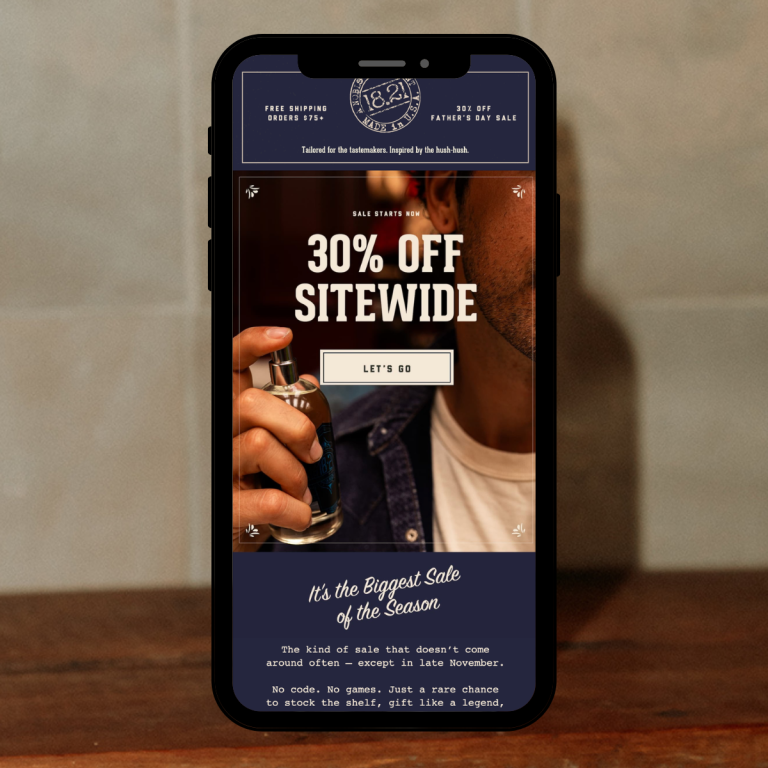
I rebuilt the Klaviyo program for 18.21 Man Made, a men’s grooming brand that came in with a genuinely sophisticated setup. Their abandoned cart flow was live, had been for a long time, and was converting at 0.11%. It reached 57,550 people over the period and produced $5,080.
We restructured it to split existing customers from non-customers, with different messaging for each. The rebuilt flow reached 18,448 people, about a third as many, and produced $12,448 at a 0.76% conversion rate.
A third of the sends. Nearly seven times the conversion rate. 2.4 times the revenue.
Nothing about that came from sending more email. It came from recognizing that the person who’s bought from you four times and the person who’s never heard of you need completely different emails, and that sending them the same one wastes both.

What each version should actually say
The non-customer. They don’t know if you’re real. What they need: your returns policy, shipping timing, real reviews, and a reason to believe the product is what the photo says it is. Not a founder story. Not your brand values.
The existing customer. They’re already sold on you, so stop selling. What they need: the cart, one click, and a reason it’s still worth having. Speed over persuasion. They almost certainly got distracted rather than convinced.
The high-value cart. Bigger carts carry more hesitation, and the hesitation is usually specific. What they need: friction removal, financing or payment plan visibility, and a real human to reply to. A blanket 10% off a $400 order is an expensive answer to a question nobody asked.
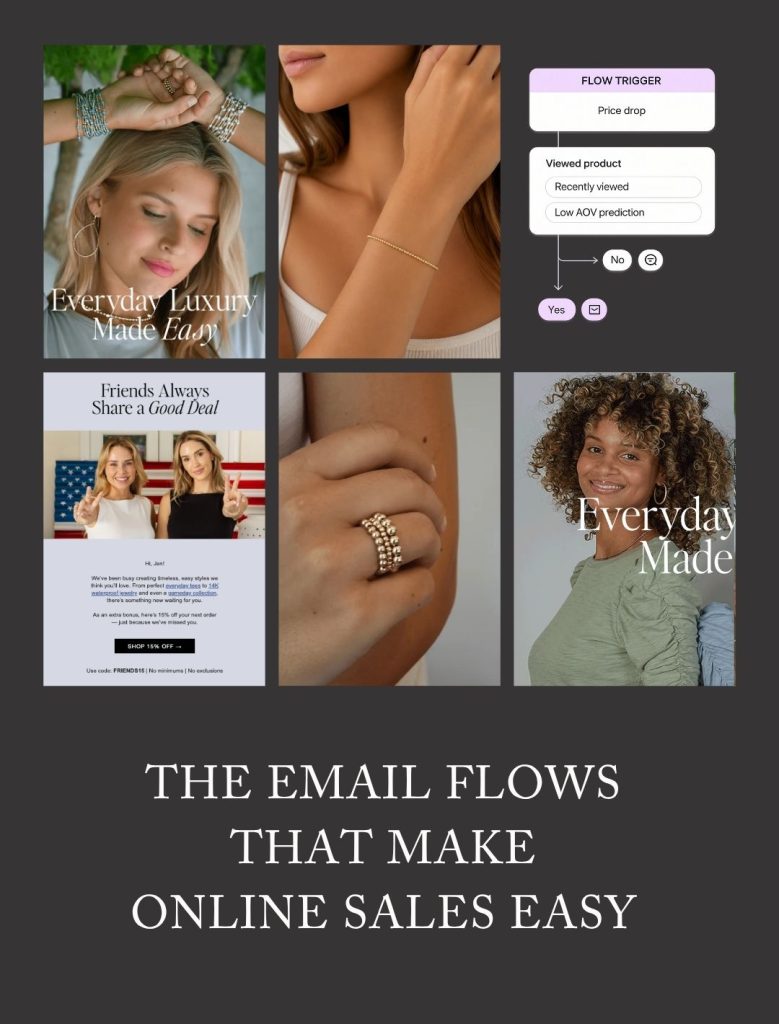
The same principle scales past cart value. For Erin Gray Designs, a luxury cashmere brand with both retail and wholesale buyers, separating wholesale into its own abandoned cart flow produced $162.33 per recipient, against $9.75 for the mixed-audience version. Same tactic, same channel, wildly different result, purely because the message matched the buyer.
The discount question
Most abandoned cart flows lead with a discount in the first email, and most of them shouldn’t.
If the first email always carries a code, your best customers learn the pattern. Abandon, wait, save 10%. You’ve built a coupon machine and attached it to the exact people who would have paid full price.
Put the discount later in the sequence, if at all, and only to people who haven’t bought before. Give your repeat customers convenience instead. They’re not price-shopping you, they’re busy.
That said, this genuinely varies. Thin-margin categories with price-sensitive buyers sometimes do earn more with an early code, and the only way to know is to run it against a holdout for a few weeks. Let the numbers help dictate the next move.
How to tell if yours is underperforming
Open your flow and check these five things before you change a word of copy.
- Conversion rate. Under about 0.5% for an established store usually means a targeting problem, not a copy problem.
- Revenue per recipient. The number that survives contact with reality. Track it monthly.
- Purchaser exclusion. Make sure people who completed the order actually stop receiving the rest of the sequence. This breaks more often than you’d think.
- Your trigger. Checkout started and added to cart are different events with very different intent behind them. Know which one you’re using and whether it’s the right one.
- The last time anyone touched it. If nobody can answer, that’s your answer.
Browse abandonment is a separate conversation
Worth saying plainly, since these get conflated constantly. Someone who viewed a product and left is not someone who added it to a cart and left. The intent gap between them is enormous, and a browse abandonment flow that talks like a cart flow reads as pushy.
Build it, keep it lighter, and keep it separate.
FAQ
How many emails should the flow have?
Three is a reasonable floor for non-customers, two is often plenty for repeat customers. The number matters far less than who’s receiving them.
When should the first one send?
Soon, usually within a few hours, while the decision is still warm. Test it. The right answer depends on your consideration cycle, and a brand selling $400 cashmere shouldn’t behave like one selling $18 soap.
Should I add SMS?
If you have consent and a real list, yes, and stagger it against the email rather than firing both at once. On the 18.21 account, SMS ran at $0.57 revenue per recipient against $0.323 for email, so the per-contact economics can be strong.
Will fixing my checkout drop my abandonment rate a lot?
It’ll help, and it won’t get you near zero, because a large share of abandonment is intent you can’t design around. Fix the friction, then stop measuring yourself against a number that includes everyone who was never going to buy.
Is retargeting worth it?
As a supplement, sure. As a substitute for the flow, no. Retargeting rents attention every single time. The flow is yours.
Go open the flow
Every list of cart abandonment fixes gives you seven things to do and no way to tell which one matters. The site-side items are an afternoon, and after that afternoon they’re finished. The flow is the asset, and right now it’s probably one message doing three jobs.
18,448 sends beat 57,550 sends by two and a half times on revenue. That’s not a copywriting story. That’s a targeting story.
So here’s your challenge. Go open your abandoned cart flow, find out whether it knows the difference between a repeat customer and a stranger, and split it if it doesn’t.
If you’d rather have someone rebuild the whole flow architecture instead of patching one split, that’s the work I do. Tell me what you find in there.